
Free worldwide shipping on bulk orders over $199

Kategorie: Applications

  • Small models, remarkable resin details

    Small models, remarkable resin details

    Resin printing captures details that are hard to reach with filament: thin spires, sharp edges and smooth curved surfaces. It is a natural fit for miniatures, architectural models and display pieces.

    Why resin suits small parts

    Each layer is cured in a single exposure, so fine features are reproduced consistently across the whole build plate.

    Plan supports carefully

    Supports have the biggest influence on surface quality. Orient the model so visible surfaces face away from supports.

    • Tilt parts 30–45° to reduce suction forces
    • Use light supports on delicate features
    • Hollow larger models and add drain holes

    Finish for display

    Wash and cure thoroughly, then remove support marks with fine sanding before priming and painting.

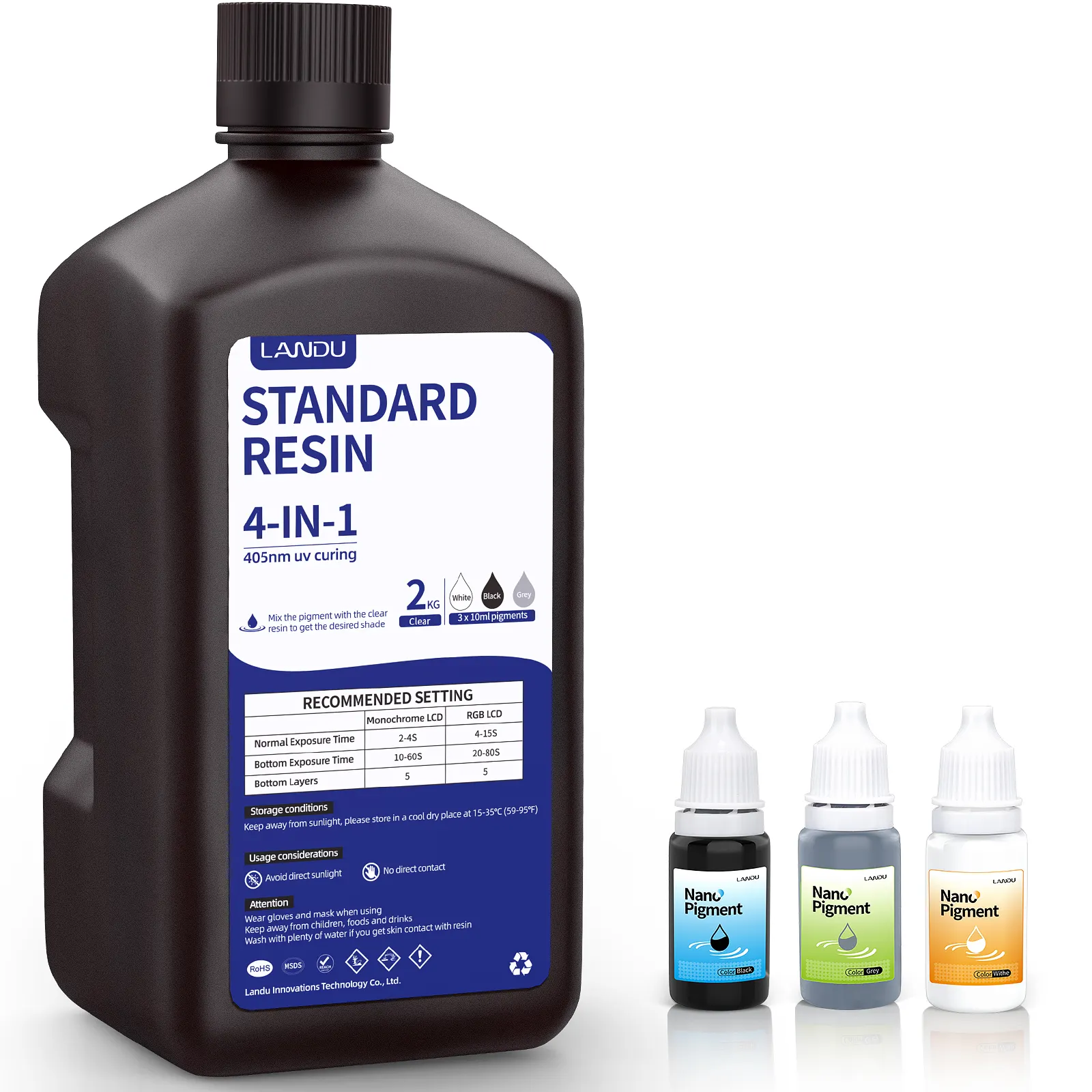
    LANDU standard and engineering resins help you match detail, toughness and finish to the model you have in mind.

  • Lattice footwear: exploring freedom of form

    Lattice footwear: exploring freedom of form

    Lattice structures let designers tune cushioning, weight and airflow in ways that moulded foam cannot. Additive manufacturing turns these structures into physical samples quickly.

    Why lattices matter

    By varying cell size and strut thickness, a single part can be firm where support is needed and soft where comfort matters.

    Choosing a flexible material

    Flexible resins and TPU each bring different feel, rebound and durability. The right choice depends on the product and how it will be used.

    • Define target hardness and rebound
    • Consider wear, flex fatigue and cleaning
    • Validate with real-world sample testing

    From concept to sample

    Short iteration loops let teams compare several lattice variations in days rather than weeks.

    LANDU works with footwear innovators on material selection, sampling and supply planning for lattice projects.

  • From a digital idea to a functional prototype

    From a digital idea to a functional prototype

    A functional prototype answers practical questions: does it fit, does it assemble and does it survive use? Planning the prototype around those questions saves iterations.

    Design for the process

    Adjust wall thickness, clearances and orientation for the printing process you plan to use.

    Pick a material that behaves like the final part

    Match stiffness, toughness and heat resistance as closely as possible so test results are meaningful.

    • PLA for form and fit checks
    • PETG or ABS for functional testing
    • Engineering resins for fine, rigid features

    Test and record

    Note what failed and why, then change one variable at a time in the next iteration.

    LANDU can recommend materials for each prototype stage, from first fit checks to near-production samples.