Free worldwide shipping on bulk orders over $199

Category: Materials

  • PETG vs ABS: choosing the right filament for functional parts

    PETG vs ABS: choosing the right filament for functional parts

    PETG and ABS are both popular for parts that need to work, not just look good. They behave differently on the printer and in use, so the right choice depends on your application.

    Where PETG fits

    PETG combines good toughness with low warping and very little odour. It is a forgiving choice for brackets, enclosures and parts that see moisture or light outdoor use.

    • Good layer adhesion and impact resistance
    • Prints well on open-frame printers
    • Slight flexibility helps snap-fit features

    Where ABS fits

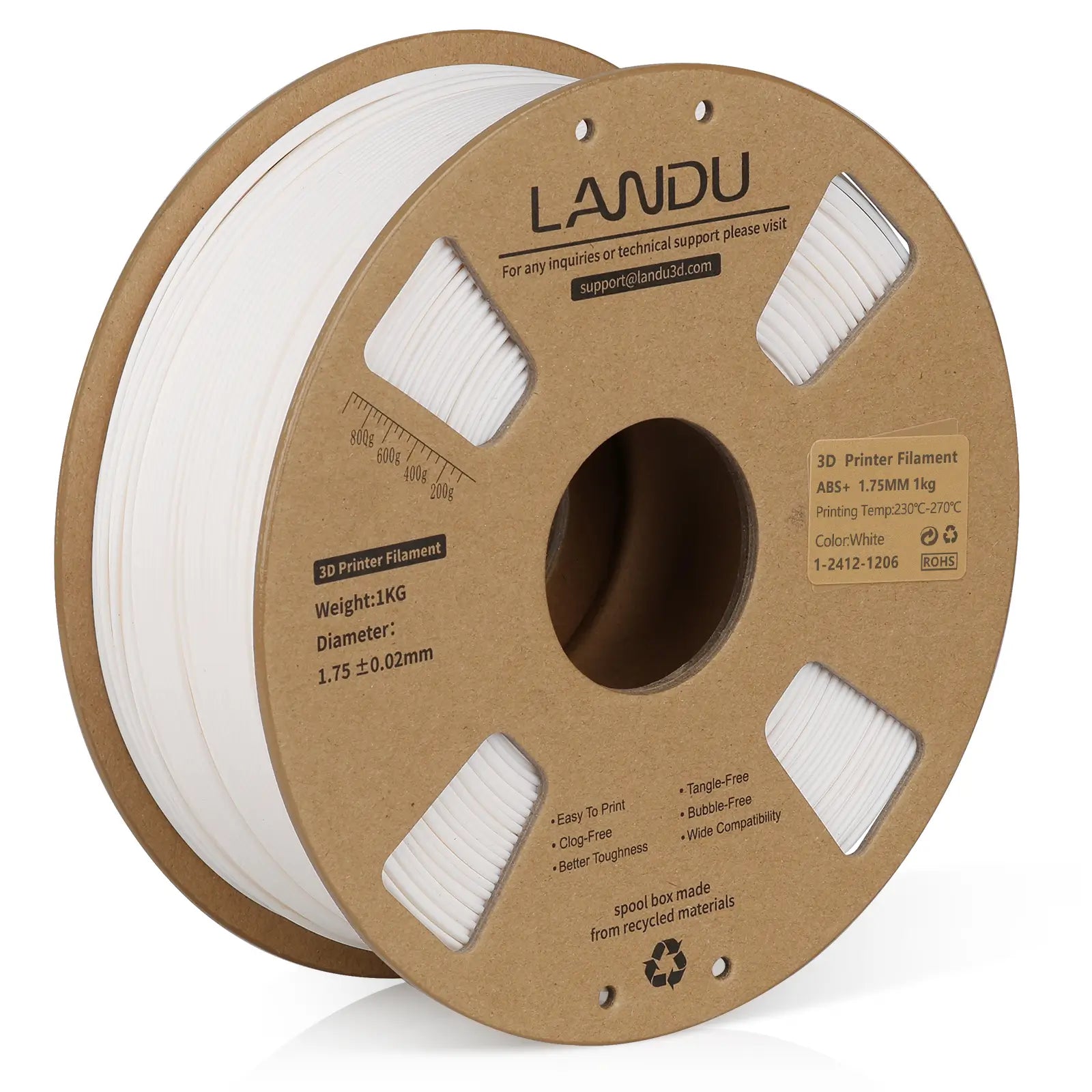
    ABS handles higher temperatures and can be sanded, glued and vapour-smoothed. It needs an enclosure and good ventilation, but rewards you with parts that stay stable in warm environments.

    A quick decision guide

    If the part lives near heat or needs post-processing, start with ABS. If you want easy printing and durable everyday parts, start with PETG. When in doubt, print both and test in the real environment.

    LANDU can help you compare samples of both materials against your application requirements before you commit to a larger order.

  • PLA or PETG: where should you start?

    PLA or PETG: where should you start?

    PLA and PETG cover most everyday printing. Picking between them is easier when you start with what the part has to do, not with the material.

    Choose PLA when appearance matters

    PLA prints crisp details, holds tight tolerances and comes in the widest range of colors and finishes. It is ideal for models, prototypes, displays and decorative objects.

    Choose PETG when the part has to work

    PETG is tougher and more heat- and moisture-resistant. It suits functional parts, outdoor accessories and items that will be handled often.

    • Better impact resistance
    • Higher heat tolerance than PLA
    • Slightly more stringing, so tune retraction

    Test both on the same model

    Printing one test part in each material is the fastest way to decide. Check fit, finish and how the part feels in use.

    Still unsure? Tell LANDU what you are making and we will suggest a starting material and settings.

  • TPU basics: printing flexible parts

    TPU basics: printing flexible parts

    TPU makes it possible to print grips, seals, bumpers and wearable parts. It needs slightly different settings than rigid filaments, but the results are worth it.

    Slow and steady

    Flexible filament can buckle in the extruder at high speed. Start slowly and increase speed once extrusion is stable.

    • Print around 20–40 mm/s to start
    • Reduce or disable retraction
    • Use a direct-drive extruder if available

    Design for flexibility

    Wall count and infill control how soft the part feels. Fewer walls and lower infill create a softer part.

    Keep it dry

    TPU absorbs moisture quickly. Dry it before printing for clean surfaces and good layer bonding.

    LANDU TPU-95A is a balanced starting point for most flexible FDM applications.